
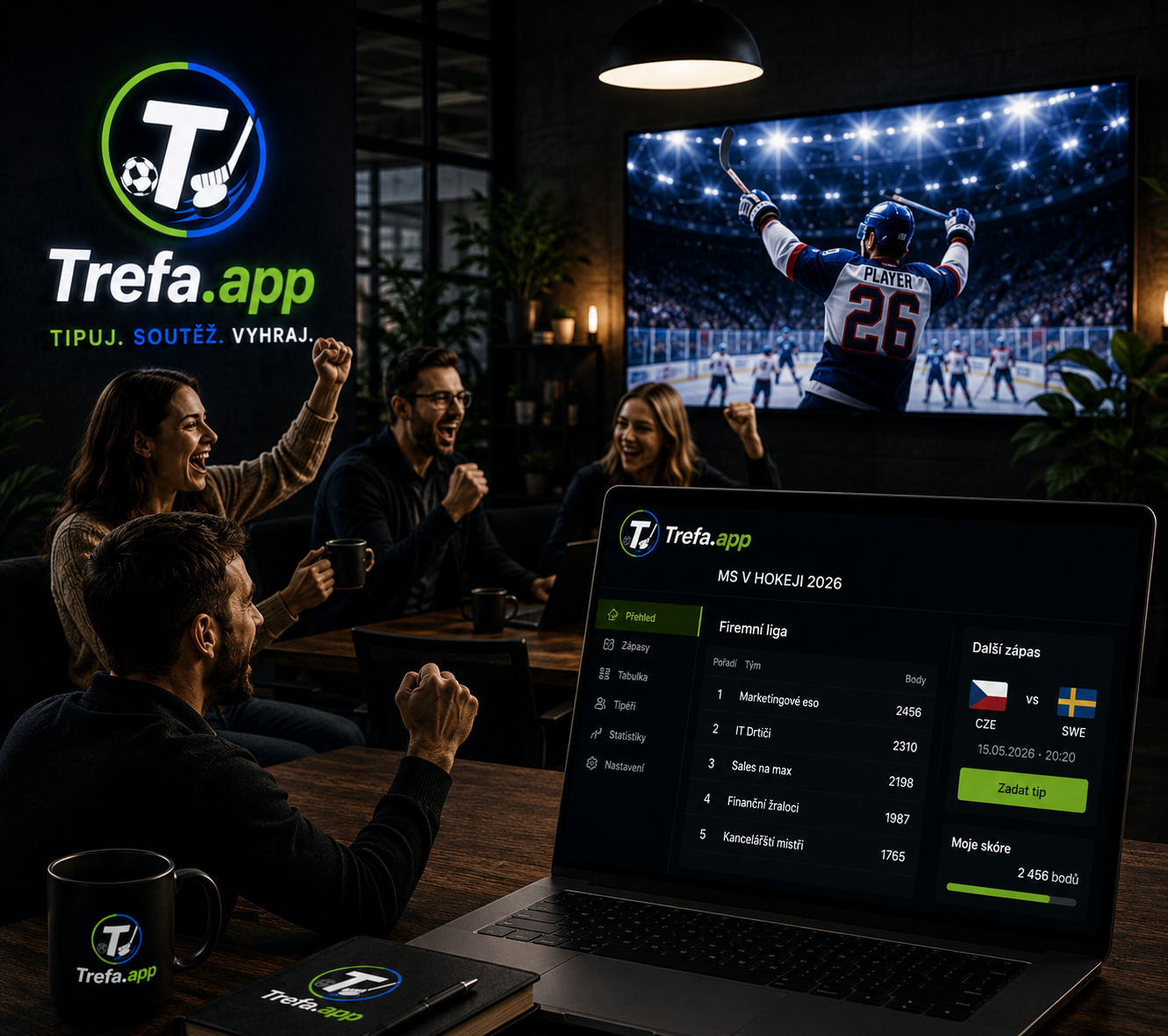
May is the month when, in many offices, the usual morning chat at the coffee machine drifts naturally from work projects to ice hockey. The championship is an ideal opportunity to connect colleagues across departments. Watching results together and a bit of friendly rivalry can enliven corporate culture far more effectively than forced team-building activities. If you are looking for a way to harness that potential, an office prediction league for the 2026 Ice Hockey World Championship is exactly the format that makes sense.
Organising something like this in a work environment does take some preparation. In the past it meant hours spent fiddling with complicated spreadsheets, constantly chasing colleagues for missing predictions and manually calculating points after every match. Today the whole process is much simpler. Setting up and running a league can be done in a few minutes, without the organiser having to sacrifice their valuable working time.
This guide will walk you through the whole process in detail. You will learn how to set up the competition technically, how to involve the right number of people and how to keep participants engaged throughout the tournament. You will also find out more about how it works with modern tools that do not require installing complicated software and are designed specifically for the needs of teams at work.
Why the Hockey World Championship
The Ice Hockey World Championship holds a very special place in our region. It is not just a sporting event, it is a social phenomenon. The 2026 tournament, hosted by Switzerland in the cities of Zurich and Fribourg, will bring 64 matches spread over 17 days (from May 15 to 31). This compact timeframe is absolutely ideal for corporate activities. It is not a one-off event for a single evening, nor an endless year-long league where people would lose interest after a month.
The tradition of national interest in hockey and vivid memories of the home championship gold in Prague in 2024 guarantee that the topic will resonate in May across the whole country, and therefore in your company too.
A well-organised World Championship prediction league can pull in even those colleagues who do not normally follow sport. The atmosphere of a big tournament, national pride and the simplicity of the basic principle of predicting results form a combination that blurs the line between die-hard fans and complete novices. As a result, the top of the standings often features people you would never have expected, which makes for great topics of informal conversation at work.
What you need before the start
Before you send out the first invitations, it is worth thinking the whole event through. Preparation will save you many questions during the tournament. A good office prediction league needs clear rules and someone who takes responsibility for the organising.
Here is a basic checklist of what you should have ready:
- Lead organiser: Designate one person who will set up the league and act as the point of contact. Most often this role is taken on by an HR manager, office coordinator or simply someone who enjoys bringing people together.
- Estimated number of participants: Be clear about who you want to invite. Whether it will be a small team of ten people, a whole department, or the entire company. For small to medium-sized groups of up to 20 participants, the organisation runs most smoothly.
- Communication channel: Decide where you will communicate about the league. It can be a dedicated channel on platforms like Slack or Microsoft Teams, or a regular group email.
- Schedule: Set a clear deadline by which people must join the league. Ideally, close registrations the day before the opening face-off of the first match.
- Prizes for the winners: Think about what people are playing for. There is no need to come up with expensive prizes — symbolic rewards with a social twist often work best.
Once you have these points sorted, you can move on to the technical solution itself. More information about the trefa.app app and its benefits for corporate culture will help you understand why choosing the right tool matters.
Step 1 — Build the league in 5 minutes
The biggest obstacle in organising activities like this is usually the administrative burden. The traditional approach involved creating a shared spreadsheet, sending out the link and then manually checking whether someone had accidentally deleted formulas or overwritten their colleagues' predictions. This method is error-prone and creates unnecessary stress for the organiser.
A modern predictor game built for exactly this purpose automates the whole process. Creating a league requires no technical knowledge and no complicated setup by the IT department.
The process is straightforward. As organiser, you go to the platform's website and choose the sign in with Google option. This step is essential for user comfort. Participants do not have to remember another password or create new accounts, they simply use their existing work or personal Google account.
After signing in, you create a new league. You enter its name, which should clearly identify your team or company. Then, from the list of supported competitions, you select the "2026 Hockey World Championship". The system automatically loads the complete schedule of matches, dates and teams. From that moment on, the platform takes care of everything itself, from updating the actual match results to instantly recalculating points in the standings.
The app is also ready for year-round operation. If the format catches on in your company, you can smoothly continue on the same platform with further events. NHL, the Czech Extraliga, the Premier League, the FIFA World Cup, UEFA EURO and the Olympic Games are all available. If you are interested in a different competition, just message us on Facebook and we will gladly add a league on request.
Step 2 — Invite your colleagues
Once the virtual space is ready, it is time to distribute the invitations. A private prediction league should be a safe and closed environment. Results, predictions and the running standings are visible only to the people you give access to. No outsider has any view into your company group.
The invitation is sent via a unique link or a QR code generated by the system. You can easily paste this link into the company newsletter, pin it to the header of your Slack communication channel, or print it out and put it on the noticeboard in the kitchen.
When communicating with colleagues, make sure to emphasise the informal, friendly nature of the whole event. The invitation text should contain basic information about what will happen, by when people can join and what the main goal is. Explain that participation does not require deep knowledge of hockey and that the system is as intuitive as possible.
For many people it is important to know that they do not have to install any app from the App Store or Google Play. The system works as a so-called PWA (Progressive Web App). That means users open the link in the browser on their mobile phone and, with a single tap, add an icon directly to the home screen. The app then behaves like a native one, runs smoothly in the background, but does not load the phone's memory and does not require complicated approval by corporate security policies.
Step 3 — Set up the scoring so it makes sense
A key task for the administrator is configuring the rules for awarding points. The simple principle here is: the clearer the system you choose, the more people will stay motivated to compete until the very end. Overly complex mathematical models can put participants off.
In the features section you will find options to customise the scoring. A three-tier model for evaluating a single match is commonly used:
Exact score
The highest number of points goes to a participant who guesses the exact score of the match. For example, if they predict 3:1 and the match actually ends 3:1, they receive the maximum point reward. This prediction requires the greatest accuracy and is rightly the most rewarded.
Goal margin (score difference)
A medium number of points goes to anyone who, although not guessing the exact number of goals scored, correctly predicts the winner and the exact score margin. An example: a participant predicts 4:2 (a two-goal margin for the home side). The match ends 3:1. The participant correctly identified both the winner and the goal margin, so they receive a partial number of points.
Correct winner
The base reward goes to anyone who correctly identifies which team will pick up more points in the table, regardless of the exact score. If a participant predicts a 5:0 home win and the match ends 2:1, they still get points for correctly picking the overall winner.
We recommend setting the point gaps so that an exact prediction is a clear advantage, but regular collection of points for correct winners also keeps a participant near the top of the table. The automatic system takes care of all calculations immediately after the referee's whistle.
Step 4 — Keep it alive during the tournament
Launching the league is only the first step towards success. For the activity to fulfil its purpose and support corporate culture, you need to keep participants engaged throughout the tournament. This is where the advantages of an automated solution truly come into play.
One of the biggest risks of longer-running activities is that, in the rush of work duties, people forget to submit their predictions for the next match day. Thanks to PWA technology, the app can send push notifications directly to the screen of a mobile phone. Participants receive a gentle reminder before matches for which they have not yet filled in their predictions. This minimises the frustration of lost points.
The 2026 Hockey World Championship programme includes a total of 64 matches divided into a group stage and the subsequent play-off. This split offers a great opportunity for ongoing communication. After the group stage, it is a good idea to publish the current standings on the company intranet or in the team chat. You can add a short comment on surprising results or single out the colleague who accurately predicted the biggest upset of the tournament.
When moving into the knock-out phase (play-off), the dynamic of the tournament changes. There are fewer matches but they matter more. This is the ideal moment to remind everyone what the prizes are. Rewards should support team spirit. Instead of expensive electronics, prizes like a shared lunch on the company, a travelling cup for the work desk, the honorary right to pick the coffee for the machine for the next month, or a box of premium doughnuts for the whole department brought in by the winner, work far better.
Common mistakes (and how to avoid them)
Despite the simplicity of the process, certain situations crop up in practice that can spoil the overall impression. Here is an overview of the most common slip-ups and how to prevent them.
- Late start: If you send invitations on the opening day of the tournament, many people will read the message too late, fail to sign up in time and lose any motivation to catch up. The ideal is to start communicating at least a week before the first match.
- Overly complex rules: Attempts to introduce extra coefficients, point multipliers based on how unlikely a result was, or bonuses for goalscorers lead to confusion. People want to open the app, enter two numbers and follow the result. Stick with the basic scoring settings.
- No ongoing communication: If the league stops being talked about in the company after launch, it just turns into a silent app on the phone. The organiser should share the current standings at least twice a week and spark some light conversation.
- Forgetting colleagues outside the office: People on holiday (Out of Office), on sick leave or working mainly from home can easily be overlooked. Make sure the invitation reaches all digital channels, not just the physical noticeboard in the office.
- Unclear or no reward: Even though people compete mainly for fun, the absence of any prize, even a symbolic or humorous one, reduces the appeal of the contest at the very end of the tournament.
Frequently asked questions
When introducing a new tool into a company, questions naturally arise from both management and employees. Below you will find answers to the most common ones. The complete overview is available in the FAQ section.
How much will it cost the company? For small and medium-sized teams, the basic version of the app is free of charge. You can find what the basic version covers on the pricing page. If your company needs more and you want to involve more departments, terms are arranged individually by agreement.
Do employees have to install an app on their phone? No. The system does not require installation of a classic app from the stores. It runs through a web browser with the option of adding a shortcut to the phone's home screen (PWA), which ensures maximum smoothness and avoids the need for complicated approval by the corporate IT department.
Is the company data safe? Yes. The league cannot be found publicly. Only people who have the unique link from the administrator have access. Sign-in goes securely through Google's infrastructure, so the app does not store any specific user passwords.
Can we continue with another sport after the hockey? The platform supports a wide range of other competitions, from the football Premier League through the Olympic Games to various national leagues. Moving to another competition after the championship is very easy.
Get started for free
Organising a shared activity around the upcoming championship does not require complicated planning or a budget. All it takes is to set aside five minutes, create the league and send invitations to your colleagues. You will create a space for sharing experiences that will naturally strengthen relationships at work. If you are ready to liven up the May atmosphere in your office, just go to the main page and try creating your first league for free.